Why Your Body Is Not Burning Fat
(Even If You Think You Are Eating Healthy)

Most people trying to lose fat are not failing because of a lack of discipline. They are failing because of a fundamental misunderstanding of how the body actually burns fat.
The conventional dietary advice most of us have followed for decades, eat small meals throughout the day, go low fat, load up on fiber and whole grains, sounds reasonable. But it runs directly against the biological systems that control whether your body is burning fat or storing it.
Here are four evidenced-based reasons your body may not be holding onto fat, no matter how clean your diet looks on paper.
1. Your Insulin Is Never Low Enough to Burn Fat
Insulin is a hormone your pancreas releases every time you eat carbohydrates. Its job is to shuttle glucose (blood sugar) into your cells for energy. That sounds useful, and it is, but insulin has a second job that most people do not know about: it acts as a lock on your fat cells.
When insulin is circulating in your blood, an enzyme called hormone-sensitive lipase (HSL) is suppressed. Think of HSL as the key that unlocks your fat cells and releases stored fat into the bloodstream to be burned as fuel. As long as insulin is elevated, that key does not work. Fat stays locked inside.
Research published in Cell Metabolism confirmed that insulin spikes significantly even after meals built around “healthy” carbohydrates like whole grains, legumes, and fruit. For someone eating three to six carbohydrate-containing meals per day, insulin rarely returns to a low enough baseline for fat burning to occur. The body simply never gets the signal to open the fat cells.
Reducing how often insulin spikes, and how high it goes, is one of the most well-supported steps for restoring the body’s ability to burn stored fat. Yet it is rarely the first thing conventional diet advice addresses.
2. A Leaky Gut Keeps Your Metabolism in a State of Emergency
Your gut lining is only one cell thick. That single-cell barrier is all that stands between the contents of your digestive tract and your bloodstream. When that barrier is intact, nutrients pass through and waste does not. When it breaks down, partially digested food particles and bacterial byproducts leak into the blood, a condition researchers refer to as increased intestinal permeability, or “leaky gut.”
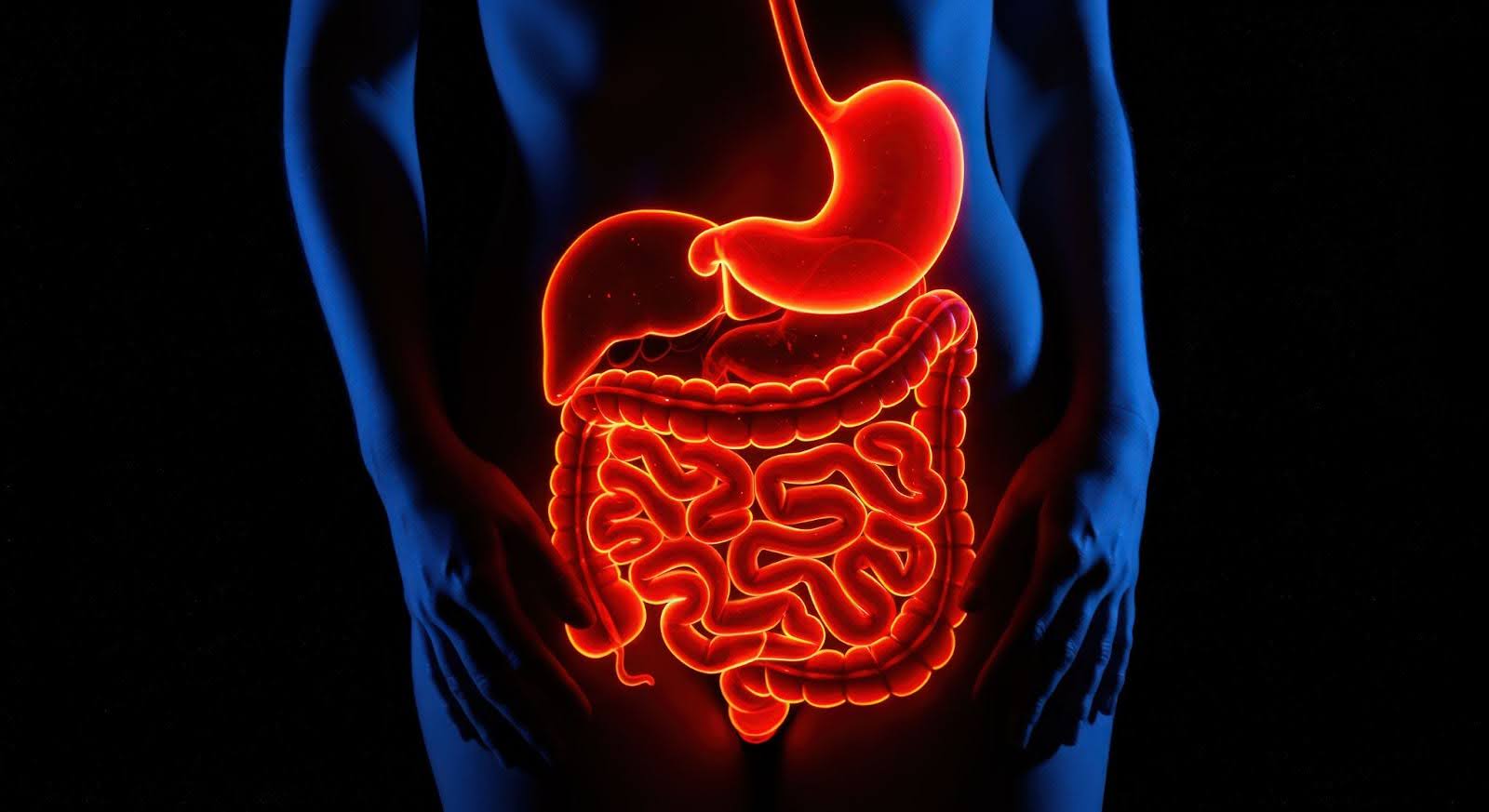
A widely cited study in the journal Gut found that certain compounds in common foods can disrupt the proteins that hold that cellular barrier together. When the barrier is breached, the immune system responds as if under attack. It releases inflammatory signaling molecules called cytokines, specifically TNF-alpha and IL-6. In plain terms, these are chemical alarm signals that put the entire body on high alert.
The problem is that this alarm state directly interferes with metabolism. Chronic low-grade inflammation makes cells resistant to insulin, which means even more insulin is needed to manage blood sugar, which keeps the fat-burning lock engaged even longer. It is a cycle that diet alone rarely breaks, because the gut damage driving it is never addressed.
3. Hidden Nutrient Deficiencies Are Slowing Your Metabolism
Fat burning is not just about eating less. It is a chemical process that requires specific nutrients to function. Think of those nutrients as spark plugs in an engine. The engine might have fuel, but without functioning spark plugs, it does not fire.

Zinc is a good example. The thyroid gland, which controls the speed of your resting metabolism, needs zinc to convert an inactive hormone called T4 into the active form called T3. T3 is essentially the throttle of your metabolism. Studies published in the Journal of Trace Elements in Medicine and Biology found that zinc deficiency reduces T3 levels, lowers the basal metabolic rate (the number of calories your body burns at rest), and measurably impairs fat oxidation, the process of burning fat for energy.
Other nutrients, including vitamin B12, heme iron, and preformed vitamin A (retinol), play equally important roles in mitochondrial energy production and hormone regulation. A person can eat a diet that appears balanced and still be functionally deficient if their gut is too inflamed to absorb what they are consuming, which brings the previous point full circle.
4. Seed Oils Are Physically Damaging the Engines That Burn Fat
Every cell in your body contains mitochondria, tiny structures whose entire job is to convert fat and other fuels into usable energy. They are, quite literally, your body’s fat-burning engines. And the structural health of those engines depends heavily on what fats you eat.
Industrial seed oils, canola, soybean, corn, and sunflower oil, are extremely high in a fat called linoleic acid (LA). When consumed regularly, LA gets incorporated into the membranes of your mitochondria. Research published in Oxidative Medicine and Cellular Longevity showed that high LA content in those membranes makes them highly unstable. They oxidize easily, a process similar to metal rusting, generating reactive oxygen species (ROS), essentially toxic byproducts that damage the mitochondria from the inside.
Damaged mitochondria cannot perform beta-oxidation (fat burning) efficiently. The result is a metabolic system that is structurally impaired at the cellular level. No amount of calorie restriction or cardio can fix a mitochondria that has been chemically damaged by years of the wrong dietary fats.
These Four Problems Feed Each Other
This is where it gets important. These four mechanisms do not operate in isolation. Gut inflammation drives insulin resistance. Insulin resistance keeps fat locked in storage. Damaged mitochondria reduce the body’s ability to burn that fat even when it is released. And nutrient deficiencies slow the hormonal systems needed to kick the whole process off.
The reason most diets fail is that they address one variable at a time while the others continue working against you. Real fat loss requires resetting the entire system, not just adjusting calories.
-N. Saplan
4. Seed Oils Are Physically Damaging the Engines That Burn Fat
Every cell in your body contains mitochondria, tiny structures whose entire job is to convert fat and other fuels into usable energy. They are, quite literally, your body’s fat-burning engines. And the structural health of those engines depends heavily on what fats you eat.
Industrial seed oils, canola, soybean, corn, and sunflower oil, are extremely high in a fat called linoleic acid (LA). When consumed regularly, LA gets incorporated into the membranes of your mitochondria. Research published in Oxidative Medicine and Cellular Longevity showed that high LA content in those membranes makes them highly unstable. They oxidize easily, a process similar to metal rusting, generating reactive oxygen species (ROS), essentially toxic byproducts that damage the mitochondria from the inside.
Damaged mitochondria cannot perform beta-oxidation (fat burning) efficiently. The result is a metabolic system that is structurally impaired at the cellular level. No amount of calorie restriction or cardio can fix a mitochondria that has been chemically damaged by years of the wrong dietary fats.
These Four Problems Feed Each Other
This is where it gets important. These four mechanisms do not operate in isolation. Gut inflammation drives insulin resistance. Insulin resistance keeps fat locked in storage. Damaged mitochondria reduce the body’s ability to burn that fat even when it is released. And nutrient deficiencies slow the hormonal systems needed to kick the whole process off.
The reason most diets fail is that they address one variable at a time while the others continue working against you. Real fat loss requires resetting the entire system, not just adjusting calories.
-N. Saplan
FREE RESOURCE
See the full 14-Day Reset method
Learn exactly how the reset works, what it fixes, and why it addresses all four root causes at once — before you decide anything
Single guide
14-Day Reset
The complete step-by-step protocol. Everything you need to start today.
1 ebook, instant access
Best value
Complete Bundle
All three guides. The full system for lasting results, not just 14 days.
3 ebooks, instant access
30-day money-back guarantee on all orders. No questions asked.
References:
Lustig, R.H., Mulligan, K., Noworolski, S.M., Tai, V.W., Wen, M.J., Erkin-Cakmak, A., Gugliucci, A., & Schwarz, J.M. (2016). Isocaloric fructose restriction and metabolic improvement in children with obesity and metabolic syndrome. Obesity, 24(2), 453-460.
Fasano, A. (2012). Leaky gut and autoimmune diseases. Clinical Reviews in Allergy & Immunology, 42(1), 71-78.
Nishiyama, S., Futagoishi-Suginohara, Y., Matsukura, M., Nakamura, T., Higashi, A., Shinohara, M., & Matsuda, I. (1994). Zinc supplementation alters thyroid hormone metabolism in disabled patients with zinc deficiency. Journal of the American College of Nutrition, 13(1), 62-67.
Mercola, J., & D’Adamo, C.R. (2023). Linoleic acid: A narrative review of the effects of increased intake in the standard American diet and associations with chronic disease. Nutrients, 15(14), 3129. https://doi.org/10.3390/nu15143129