Stress Is Not Just in Your Head. It Is on Your Waistline.
The hormone that overrides every diet you have ever tried
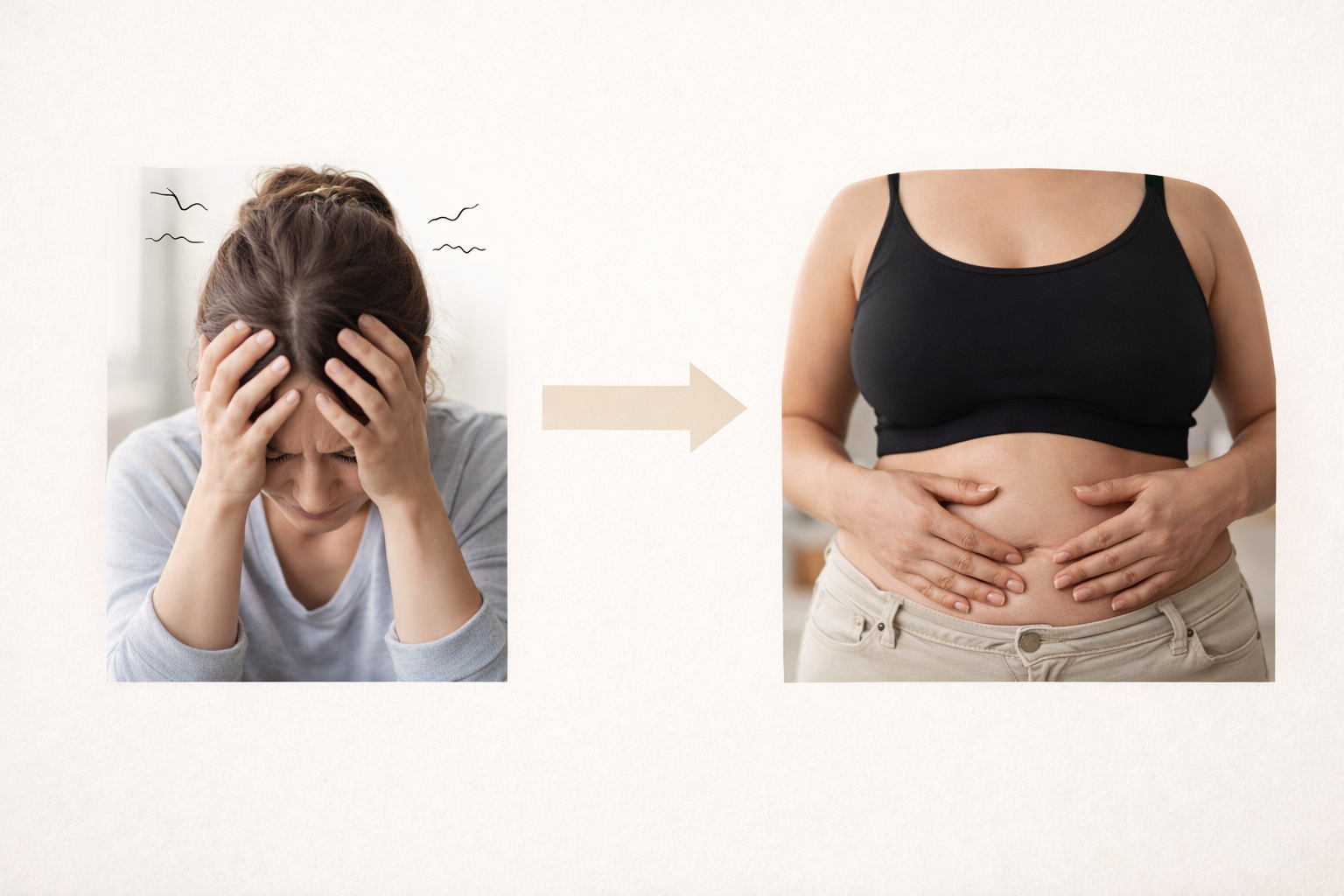
You are eating well. You are moving your body. You are doing everything the advice tells you to do. And yet the weight around your midsection stays exactly where it is, as if it has been welded there. For many women, the missing piece is not food or exercise at all. It is a hormone called cortisol, and it has been quietly working against everything else you are trying to do.
Cortisol is your body’s primary stress hormone. Released by the adrenal glands in response to physical or emotional threat, it is an essential part of the human survival system. But the same mechanism that kept our ancestors alive in moments of genuine danger is now being triggered by deadlines, difficult relationships, financial pressure, and the relentless low-grade stress of modern life. And when cortisol runs chronically elevated, it does something very specific to the body: it stores fat, particularly around the abdomen, and it makes it nearly impossible to lose it.
1. How cortisol directly drives fat storage
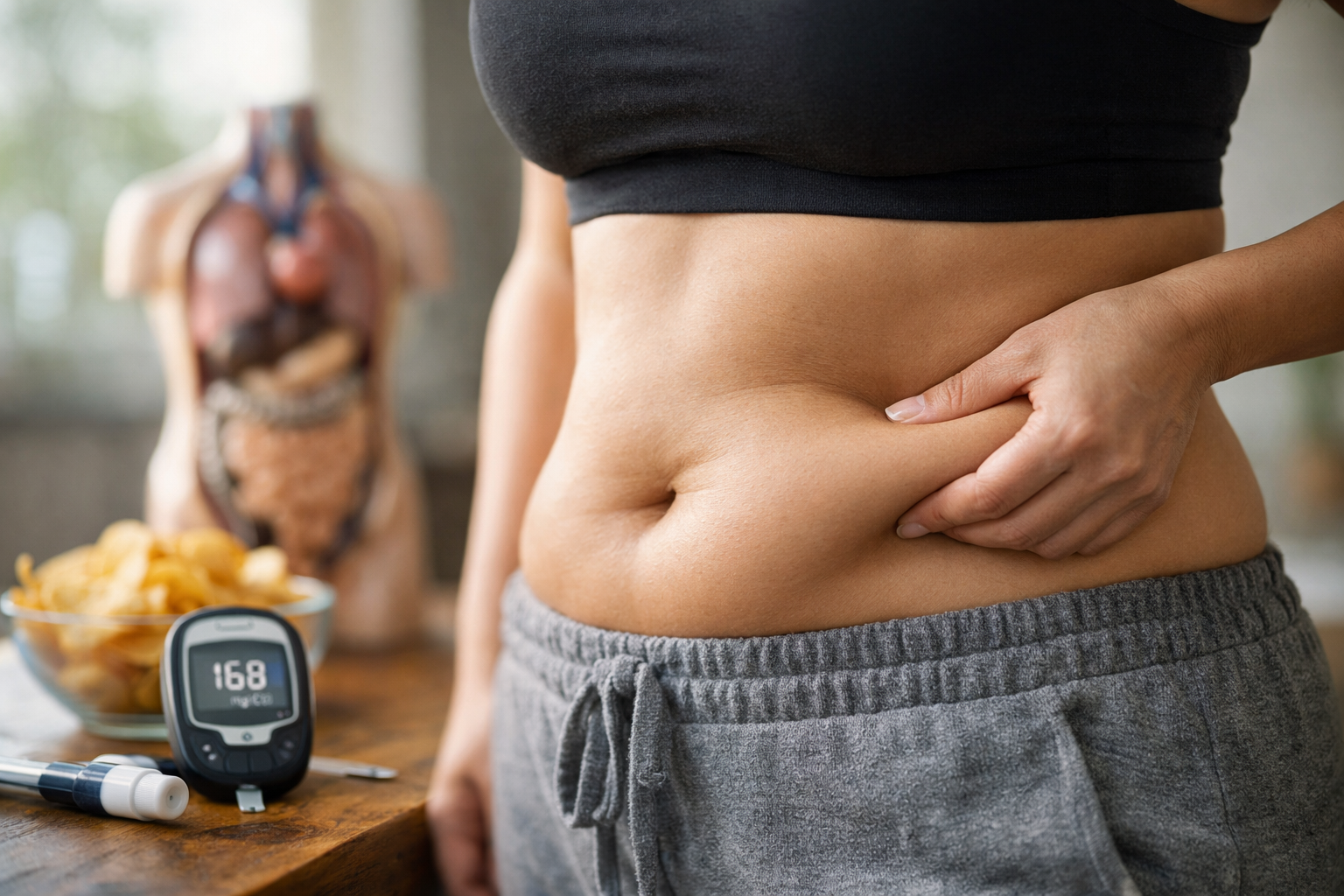
Cortisol raises blood sugar by signaling the liver to release stored glucose, preparing the body for fight or flight. This glucose surge triggers an insulin response. And as established in the research on insulin and fat metabolism, elevated insulin locks fat inside fat cells and prevents it from being released for fuel. Research published in Psychoneuroendocrinology found that women with higher cortisol reactivity stored significantly more abdominal fat than women with lower cortisol responses, independent of their total caloric intake.
The fat deposited under chronic cortisol elevation is not evenly distributed. It accumulates preferentially in visceral adipose tissue, the deep abdominal fat that surrounds the organs. This type of fat is metabolically active in a harmful way, releasing inflammatory compounds that further disrupt insulin sensitivity and hormonal balance, creating a cycle that diet alone cannot interrupt.
2. Why calorie restriction makes cortisol worse
Here is the part that explains why dieting often backfires for stressed women. Calorie restriction is itself a physiological stressor. A study in the journal Psychosomatic Medicine found that women on calorie-restricted diets showed measurable increases in cortisol compared to women eating without restriction. The very act of dieting was elevating the hormone most responsible for fat storage around the midsection.
This creates a paradox at the heart of conventional weight loss advice. The more a stressed woman restricts her food intake, the higher her cortisol climbs. The higher her cortisol climbs, the more her body resists fat loss. The more her body resists, the harder she restricts. The cycle tightens with every attempt.
3.What actually breaks the cortisol-fat cycle
The research points consistently toward two interventions: stabilizing blood sugar and reducing the physiological stress load of eating itself. When blood sugar is kept steady through strategic food timing and the removal of high-glycemic foods, cortisol has fewer triggers throughout the day. The body stops receiving repeated emergency signals and begins to downregulate its stress response.
A study in the journal Nutrients found that dietary protocols focused on blood sugar stabilization significantly reduced morning cortisol levels within two weeks, independent of weight loss. The body does not need to lose the weight first before cortisol drops. It needs the right metabolic conditions, and the cortisol drops first, creating the hormonal environment in which fat loss finally becomes possible.

"For many women, weight is not the problem. It is the symptom. The stress response underneath it is what needs to change first."
Fourteen days of stable blood sugar, consistent meal timing, and the removal of foods that trigger repeated cortisol spikes is enough to begin measurably shifting the hormonal environment. Not because stress disappears. Because the body’s physiological response to it finally has room to settle.
FREE RESOURCE
See the full 14-Day Reset method
Learn exactly how the reset works, what it fixes, and why it addresses all four root causes at once — before you decide anything
Single guide
14-Day Reset
The complete step-by-step protocol. Everything you need to start today.
1 ebook, instant access
Best value
Complete Bundle
All three guides. The full system for lasting results, not just 14 days.
3 ebooks, instant access
30-day money-back guarantee on all orders. No questions asked.
References:
- Epel, E., et al. (2000). Stress and body shape: stress-induced cortisol secretion is consistently greater among women with central fat. Psychosomatic Medicine, 62(5), 623-632.
- Tomiyama, A. J., et al. (2010). Low calorie dieting increases cortisol. Psychosomatic Medicine, 72(4), 357-364.
- Hewagalamulage, S. D., et al. (2016). Stress, cortisol, and obesity: a role for cortisol responsiveness in identifying individuals prone to obesity. Domestic Animal Endocrinology, 56, S112-S120.
- Incollingo Rodriguez, A. C., et al. (2015). Hypothalamic-pituitary-adrenal axis dysregulation and cortisol activity in obesity. Psychoneuroendocrinology, 62, 301-310.
- Moyer, A. E., et al. (1994). Stress-induced cortisol response and fat distribution in women. Obesity Research, 2(3), 255-262.