Why Eating Dinner BEFORE Lunch Melted 50 Pounds Off My Body (After 10 Failed Pregnancies Nearly Destroyed Me)
The bizarre 14-day experiment that erased my constant hunger…and why 40,000+ women are now eating their meals in the ‘wrong’ order to lose 8-15 pounds without willpower.
“After years of failed diets and heartbreak, the 14-Day Reset gave me back my energy and hope. In just two weeks, my clothes fit better and my cravings disappeared — all without counting a single calorie.” - Jennifer
Customer results have not been independently verified. Individual results may vary.
"Your baby has no heartbeat."
Dear Friend,
Five words that shattered everything I thought I knew about life, about hope, about my own body.
But this wasn’t the first time I’d heard them.
By the time I sat on that cold examination table at 20 weeks pregnant, I had already lived through nine other losses. Nine other times I’d seen that positive pregnancy test and dared to hope. Nine other times I’d walked into a doctor’s office, only to be told there was no heartbeat, no movement, no life where life should have been.
Some came early – at 6 weeks, 8 weeks, 10 weeks. Brief flickers of hope extinguished almost as quickly as they began. Others came later, after I’d heard heartbeats on previous visits, after I’d started to believe this time might be different.
Each loss carved out a deeper piece of my soul. Each one made the next pregnancy feel more fragile, more precious, more terrifying.
But this time felt different. This time I’d made it to 20 weeks – further than I’d ever gone before.
I’d felt her moving inside me for weeks. The night before this appointment, she had been so active I couldn’t sleep. I kept my hand pressed against my belly, feeling her tiny kicks and rolls, imagining what she would look like, what her cry would sound like.
I walked into that ultrasound room with more hope than I’d felt in years. This was supposed to be the appointment where we’d see her face clearly, maybe catch her sucking her thumb or stretching her little arms. After nine losses, surely this was my rainbow baby. Surely I had suffered enough.
Instead, I watched the technician’s expression change from routine professionalism to something else entirely. I saw her pause, move the wand frantically across my belly, press harder, searching desperately for something that wasn’t there.
The silence in that room was deafening.
When the doctor finally spoke those five familiar words, they hit differently this time. This wasn’t just another early loss. This was 20 weeks of believing, planning, dreaming. This was a nursery half-painted, a name carefully chosen, a future mapped out in my mind.
There is no pain greater than holding your child and knowing you will never hear them cry.
That became my reality for the tenth and final time.
What followed was 27 hours of induced labor – contractions that served no purpose except to deliver heartbreak. An epidural that barely worked, leaving me to feel every wave of pain that was bringing me nothing but loss. The cruelest irony of all: after nine previous losses, my body was finally working perfectly to deliver a baby who would never take a breath.
When they placed her in my arms, she was absolutely perfect. Ten tiny fingers that I counted over and over. Ten perfect toes. The most beautiful rosebud lips. Eyes that would never open. A chest that would never rise and fall with breath.
I held her for hours, memorizing every detail of her face, the weight of her tiny body against my chest, the way her hand fit perfectly around my finger. And then came the moment that still haunts me: walking out of that hospital with empty arms for the tenth time, leaving my daughter behind in a place that smelled of antiseptic and loss.
That loss broke me in a way the other nine hadn’t.
Maybe it was the accumulation of grief – ten pregnancies, ten losses, ten times of having hope built up just to be shattered. Maybe it was because I’d carried her so much longer, felt so much more connected to her. Or maybe I had simply reached my breaking point.
The grief from all those losses – the early ones, the later ones, and this final devastating one – settled into my body like a poison.
With each loss, I had gained weight. Comfort eating during the dark days. Stress eating during the hopeful days. Hormones thrown completely out of balance by repeated cycles of pregnancy and loss.
I found myself reaching for food not because I was hungry, but because it was the only thing that seemed to quiet the pain, even if just for a moment. Ice cream at midnight while I cried over another negative pregnancy test. Bread and pasta that seemed to wrap around my broken heart like a warm blanket.
But the comfort was always temporary. The weight, however, was permanent.
By the time I walked out of that hospital for the last time, I was carrying an extra 50 pounds. Fifty pounds of accumulated grief made manifest. Fifty pounds that represented every loss, every disappointment, every moment my body had failed to do what seemed to come so easily to other women.
My body felt like a graveyard of dreams.
The woman looking back at me in the mirror was a stranger. Puffy face that showed the toll of years of crying. Tired eyes that had seen too much loss. Clothes that hadn’t fit in years. I barely recognized myself, and what I did recognize, I didn’t like.
I had three beautiful, living children who needed their mother. But I was drowning. The depression from this final loss was like a heavy blanket I couldn’t throw off. It affected everything – how I spoke to my children, how I related to my husband, how I moved through the world.
Some days, I couldn’t even get dressed. I would sit in my car in the grocery store parking lot, overwhelmed by the simple task of buying food for my family, tears streaming down my face for reasons I couldn’t even articulate anymore.
I went through the motions of living, but I wasn’t really alive. I was just surviving, day after day, carrying the weight of all that accumulated loss.
And the physical weight seemed to have a life of its own. Nothing made sense anymore. I could eat the same foods that used to maintain my weight, and I’d gain. I could diet strictly and barely lose a pound. My body seemed to be operating by rules I didn’t understand, rules that felt designed to punish me for my failures.
Maybe you know this feeling. Maybe you’ve stood where I stood, looking in the mirror at a body that doesn’t feel like your own. Maybe you’ve carried your own grief – different from mine, but just as heavy. Your own disappointments, your own sense that life has handed you more than you can bear.
Maybe you’ve felt like your body is working against you, holding onto weight no matter what you do, exhausted no matter how much you rest, hungry no matter how much you eat.
If so, I need you to know: you are not alone. And you are not broken.
But I didn’t know that then.
All I knew was that I couldn’t continue living this way. I couldn’t keep carrying this weight – both physical and emotional. I couldn’t keep looking in the mirror and seeing a stranger. I couldn’t keep disappointing my children by being only half present in their lives.
Something had to change.
That was the beginning of the spiral.
The Spiral
The months that followed blurred together in a haze of exhaustion and despair.
Getting out of bed felt like climbing a mountain. Some days I didn’t even try. I’d lie there staring at the ceiling, knowing my children needed breakfast, knowing life was happening around me, but feeling completely unable to participate.
When I did manage to function, it was purely on autopilot. Make the lunches. Drive to school. Smile when other parents asked how I was doing. Come home and collapse.
Food became my only comfort and my greatest enemy. I’d eat to numb the pain, then hate myself for eating. The scale kept climbing – 5 more pounds, then 10, then 15. Nothing I wore fit properly. I started avoiding mirrors altogether.
That’s when the diet attempts began.
First, I tried going vegetarian. “Plant-based is healthier,” everyone said. For three weeks, I lived on salads, beans, and whole grains. I felt weak, constantly hungry, and somehow gained 2 more pounds. I quit when I found myself crying over a plate of lentils.
Next came paleo. I threw out everything processed, bought expensive grass-fed meat, filled my cart with vegetables. The first week showed promise – I lost 3 pounds. But by week two, the cravings hit like a freight train. I’d dream about bread. I’d stand in my kitchen at midnight, white-knuckling my way through another craving attack. I lasted 10 days.
Then keto. “Fat is fuel,” the books promised. I bought strips to test my ketones, tracked every macro, ate 70% fat. The “keto flu” knocked me flat for a week. When I finally felt better, I was irritable, my breath smelled terrible, and social eating became impossible. I made it 3 weeks before I cracked at my daughter’s birthday party.
Finally, calorie counting. I downloaded apps, weighed every morsel, lived by the numbers. 1200 calories felt like starvation. I was obsessed, checking my phone constantly, calculating whether I could “afford” an apple. I lost 8 pounds in a month, then hit a wall. My metabolism seemed to shut down. I was eating less than ever but maintaining the same weight.
Each failed attempt felt like proof that I was fundamentally broken. That grief had damaged not just my heart, but my willpower, my metabolism, my very ability to be healthy.
The yo-yo pattern became predictable: hope, brief progress, crushing failure, more weight gained than lost. With each cycle, I blamed myself more. Maybe I was just weak. Maybe I lacked discipline. Maybe this was simply who I was now.
Late one night, after yet another failed attempt, I sat at my kitchen table with tears streaming down my face. My laptop was open in front of me, and I was desperately searching for answers. “Why can’t I lose weight?” “What’s wrong with my metabolism?” “How to lose weight after trauma?”
That’s when I stumbled across something that would change everything. A book about nutrition that challenged every single thing I thought I knew about food, about dieting, about how the human body actually works.
As I read the first chapter, my hands were shaking. Not from sadness this time.
From anger.
The Discovery
I opened that book with shaking hands, not knowing it would shatter everything I believed about nutrition.
The first chapter talked about something I’d never heard of: how most grains and soy in our food supply are genetically modified to survive massive doses of pesticides. These aren’t the foods our grandparents ate. They’re laboratory creations designed for profit, not health.
Page after page revealed truths that made my stomach turn. Those “heart-healthy” seed oils I’d been cooking with? They’re chemically extracted, bleached, and deodorized. They oxidize in our bodies, creating inflammation at the cellular level.
The “eat less, move more” advice I’d followed religiously? It actually slows your metabolism by up to 20% within weeks. Your body thinks it’s starving and fights back by ramping up hunger hormones and storing every calorie as fat.
But the revelation that broke me open was this: chronic calorie restriction doesn’t just slow your metabolism. It increases cortisol – the stress hormone that drives fat storage around your midsection. The very act of dieting was making me gain weight.
I sat there at 2 AM, crying again. But these weren’t tears of sadness.
They were tears of rage.
Rage that I’d been lied to. Rage that I’d spent years blaming myself for following broken rules. Rage that the “healthy” foods I’d forced myself to eat were actually making me sicker.
But underneath the anger was something I hadn’t felt in months: hope.
Because suddenly, everything made sense. My constant hunger on low-calorie diets. My energy crashes on “balanced” meals. My cravings that felt impossible to resist. My body gaining weight no matter how strictly I followed the rules.
My body wasn’t betraying me. It was protecting me.
For the first time in years, I realized:
I wasn’t broken. The system was broken. And if the system was broken, maybe there was another way.
The Lies We Were Told
That night, I couldn’t stop reading. Every page revealed another lie I’d been living by.
"Eat less, move more."
The foundation of every diet I'd ever tried. But the research was clear: severe calorie restriction triggers your body's starvation response. Your metabolism slows. Your hunger hormones surge. You're literally fighting millions of years of evolution with willpower alone. No wonder I always failed.
"Vegetables and grains should be the foundation of your diet."
I'd filled my plate with whole grains and leafy greens for years, feeling virtuous even as I gained weight. But those grains are loaded with anti-nutrients that block mineral absorption. Many vegetables contain natural toxins that can trigger inflammation. And that's before you factor in the pesticides.
"Avoid fat - it makes you fat."
I'd spent decades choosing low-fat everything, convinced I was being healthy. Meanwhile, I was starving my brain of the fats it needs to function. I was spiking my blood sugar with all those "healthy" carbs. I was constantly hungry because fat is what actually makes you feel satisfied.
"Salt is dangerous."
I'd been avoiding salt for years, thinking I was protecting my heart. But salt is essential for hydration, nerve function, and energy production. Without enough salt, you feel tired, foggy, and weak. Your body holds onto water, making you feel bloated and heavy.
Every single rule I’d followed religiously was not just wrong – it was actively harmful.
Every single rule I’d followed religiously was not just wrong – it was actively harmful.
The food companies knew this. They’d spent billions convincing us to eat their processed products while avoiding the foods humans had thrived on for thousands of years. They’d turned us into customers for life, sick and dependent on their solutions to problems they’d created.
The medical establishment went along with it. Prescriptions for problems that could be solved with food. Medications for conditions that were often just symptoms of poor nutrition.
I felt like I’d been living in a prison built from lies, and I’d been my own jailer.
By dawn, I was furious. Not just angry – absolutely enraged. I’d wasted years hating my body, blaming myself, thinking I was weak and undisciplined. I’d tortured myself with diets that were designed to fail. I’d carried shame that never belonged to me.
But underneath that rage was a question that changed everything:
If everything I'd believed was wrong, what was the truth?
The Truth About the Body
The truth was simpler than I ever imagined.
Our bodies aren’t broken. They’re not failing us. They’re not betraying us when we gain weight or feel exhausted or crave foods we think we shouldn’t eat.
Our bodies are protecting us.
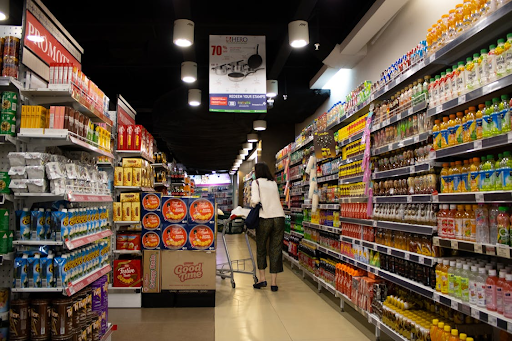
When we eat processed foods loaded with chemicals, our bodies create inflammation to fight off what they perceive as toxins. When we severely restrict calories, our bodies slow our metabolism to keep us alive during what feels like a famine.
When we eat sugar and refined carbs, our bodies produce insulin to manage the blood sugar spike – and insulin’s job is to store energy as fat.
Every symptom I’d experienced – the constant hunger, the energy crashes, the stubborn weight – wasn’t a sign that my body was broken. It was a sign that my body was working exactly as designed, trying to protect me from the foods and habits that were harming it.
For thousands of years, humans thrived eating meat, fish, eggs, and seasonal plants. We didn’t count calories or fear fat or worry about cholesterol. We ate when we were hungry, stopped when we were full, and our bodies naturally maintained healthy weights.
Fat wasn't the enemy
it was clean fuel. When you eat fat without sugar and refined carbs, your body burns it efficiently for energy. Your brain runs beautifully on ketones, the byproducts of fat metabolism. You feel satisfied, focused, and stable.
Protein wasn't just for bodybuilders
it was the building block of every cell, hormone, and enzyme in our bodies. When you eat enough protein, your body doesn't need to break down muscle for amino acids. Your metabolism stays strong. Your hunger naturally regulates itself.
Salt wasn't dangerous
it was essential. Proper sodium levels support every cellular function, maintain healthy blood pressure, and prevent the bloating and water retention that come from electrolyte imbalances.
This wasn’t a diet. This was how humans were designed to eat.
And when you give your body what it actually needs, everything begins to change.
The First Steps of Change
I decided to test everything I’d learned, starting immediately. No more counting calories. No more avoiding fat. No more forcing myself to eat foods that left me hungry an hour later. Instead, I did something radical: I listened to my body.
For breakfast, I had eggs cooked in butter with a generous sprinkle of salt. Not egg whites. Not a measured tablespoon of “heart-healthy” oil. Real eggs, real butter, real salt.
I waited to see if I’d crash by 10 AM like I always did. Instead, something remarkable happened: I wasn’t hungry. At all. For the first time in years, I made it to lunch without thinking about food once.

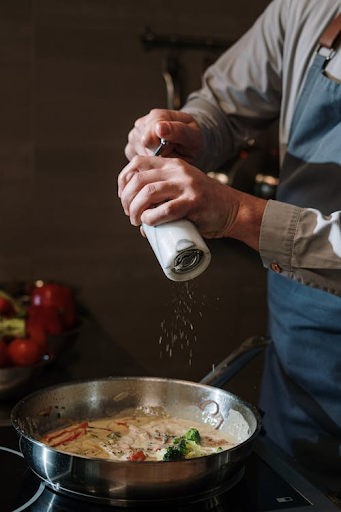
Lunch was a piece of salmon with more butter and salt. No quinoa. No side salad. Just the fish my body was craving.
By day three, something had shifted. The constant mental chatter about food had quieted. I wasn’t planning my next meal while eating my current one. I wasn’t battling cravings every few hours.
By day five, I woke up before my alarm – not groggy and exhausted, but genuinely rested. My skin looked clearer. The puffiness around my eyes had started to fade.
A week in, I stepped on the scale expecting nothing. I’d been disappointed so many times before. But I’d lost 4 pounds without trying, without restricting, without being hungry.
For the first time in months, I felt hope.
This wasn’t another diet doomed to fail. This wasn’t about willpower or restriction or punishment. This felt like coming home to my body after years of being at war with it.
But I knew I needed more than just intuition. I needed structure, guidelines, a framework I could follow consistently. Something that would prevent me from slipping back into old patterns when life got stressful.
That's when I realized: this wasn't a diet. This was a reset.
The Birth of the Reset
Over the next few weeks, I refined what I was doing into something more structured. I couldn’t rely on intuition alone – I needed clear guidelines that would work even when I was stressed, tired, or emotional.
I studied the research behind everything I was experiencing. Why did eating fat make me feel so satisfied? How long did it take for cravings to truly disappear? What was the optimal timeline for my body to adapt to burning fat for fuel instead of sugar?
The answer kept coming back to the same number: 14 days.
That’s how long it takes for your taste buds to reset and stop craving hyper-sweet processed foods. It’s how long your body needs to become efficient at burning fat. It’s long enough to see real changes in energy, sleep, and mood, but short enough to feel manageable even if you’ve failed at every diet before.
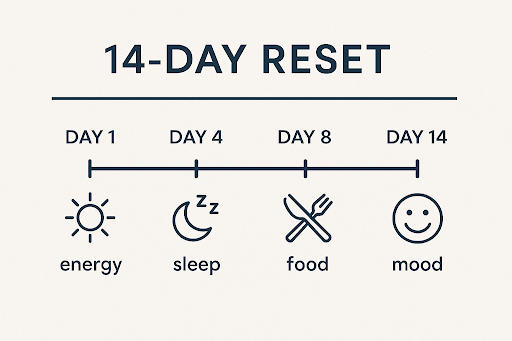
I created three simple pillars:
Eat the foods your body recognizes
meat, fish, eggs, natural fats, salt. Nothing that required a factory to make or a laboratory to pronounce.
Move your body gently every day
not punishing workouts that left me exhausted, but movement that made me feel alive and strong.
Track what matters
not calories or macros, but how I felt, how I slept, how my clothes fit, how much energy I had.
I tested this framework on myself first, then shared it with a few friends who were struggling with their own weight and energy issues. The results were remarkable. Everyone who tried it experienced similar changes – better sleep, steady energy, clothes fitting looser, cravings disappearing.
More importantly, it felt sustainable. This wasn’t another 30-day challenge or extreme intervention. It was a reset that prepared your body for long-term success, whatever that looked like for you.
I named it the 14-Day Reset Method. And the results came fast.
The Results You Can See and Feel
Within two weeks, I had lost 11 pounds. But the number on the scale was the least remarkable change.
My energy was steady from morning until night – no more 3 PM crashes that sent me searching for caffeine or sugar. I woke up naturally before my alarm, genuinely rested for the first time in years.
The constant mental chatter about food had disappeared. I wasn’t planning my next meal while eating my current one. I wasn’t battling cravings or white-knuckling my way through grocery store aisles.
My skin cleared. The puffiness around my face and midsection melted away. My clothes fit differently – not just looser, but better. I stood taller, moved with more confidence.
But the most profound change was emotional. The shame I’d carried about my body, my eating, my “lack of willpower” – it simply lifted. I felt present with my children in a way I hadn’t in months. I laughed more easily. I stopped avoiding mirrors.
As word spread, other women wanted to try the reset themselves.
Maria, a busy mom of three, watched her PCOS symptoms improve dramatically. Her irregular cycles became regular. Her energy stabilized. Her cravings for sugar disappeared completely.
Lisa had been on statins for cholesterol management for eight years. After completing the reset and continuing with the principles, her numbers improved so significantly that her doctor told her she could discontinue the medication.
Jennifer’s chronic bloating – something she’d accepted as “just part of getting older” – vanished within the first week. Her sleep deepened. Her joint pain decreased noticeably.
These weren’t isolated cases or lucky exceptions. Every woman who completed the full 14 days experienced similar improvements. Weight loss, yes, but so much more than that.
The reset works for anyone willing to try it.
How the Reset Works
The 14-Day Reset Method isn’t complicated, but it is precise.
It starts with a carnivore foundation – the most nutrient-dense, satisfying foods available. Meat, fish, eggs, and natural fats. These foods provide complete proteins, essential fatty acids, and bioavailable vitamins that your body can actually use.
Then we strategically add clean carbohydrates – not as “cheats” or rewards, but as fuel for your workouts and recovery. Fruit, root vegetables, rice. Foods that replenish your energy stores without triggering the blood sugar chaos that comes from processed carbs.
The timing matters. The combination matters. The quality matters.
This isn’t about eating less. It’s about eating right.
Why 14 days?
Because that's exactly how long your body needs to make the metabolic shift from burning sugar to burning fat efficiently. It's long enough to break the cycle of cravings and energy crashes, but short enough to feel manageable even if you've failed a every other attempt.
You won’t count calories. You won’t track macros. You won’t weigh portions or plan elaborate meal prep sessions.
Instead, you’ll eat real food when you’re hungry and stop when you’re satisfied. You’ll move your body in ways that feel good. You’ll track the things that actually matter – your energy, your sleep, your mood, how your clothes fit.
The beauty is in the simplicity. After years of complicated rules and conflicting advice, this feels like permission to finally trust your body again.
But the real magic happens in what you experience day by day.
The 3 Core Rules
After testing this reset with dozens of women, three core rules emerged. Simple enough to remember, specific enough to work.
Rule 1: Eat What Your Body Recognizes
Meat, fish, eggs, butter, salt. Foods that don’t need ingredient lists because they ARE the ingredient. When you eat a piece of salmon, your body knows exactly what to do with it – break it down into amino acids for muscle repair, omega-3s for brain function, nutrients for cellular energy.
Compare that to a protein bar with 20 unpronounceable ingredients. Your body has to work overtime just to figure out what it’s dealing with, often storing the confusion as inflammation and fat.

This isn’t about restriction. It’s about clarity. Your body can finally focus on healing instead of defending itself against chemical invaders.
Rule 2: Move With Purpose, Not Punishment
Gentle daily movement that makes you feel alive, not exhausted. A 20-minute walk. Bodyweight exercises in your living room. Stretching while you watch TV. Movement that serves your body instead of punishing it for what you ate.
When you’re properly fueled with fat and protein, exercise becomes energizing instead of depleting. You want to move because you feel good, not because you “have to” burn off calories.
Rule 3: Track What Actually Matters
Forget the scale for 14 days. Instead, notice how you sleep. How your energy feels throughout the day. Whether your clothes fit differently. How often you think about food. These are the real markers of health.
Your body composition can change dramatically even when the scale barely moves. Muscle is denser than fat. Losing inflammation means losing puffiness without necessarily losing pounds. The scale lies. Your energy levels don't.
Why It Works So Fast
The changes happen quickly because you’re working with your biology, not against it.
Within 24-48 hours of removing processed foods, your body stops producing the inflammatory response that causes bloating and water retention. That “puffy” feeling starts to disappear almost immediately.
By day 3-4, your insulin levels begin to stabilize. When insulin isn’t constantly elevated from blood sugar spikes, your body can finally access stored fat for energy. This is when many people notice their energy becoming more steady throughout the day.
Around day 5-7, something remarkable happens: your brain starts running efficiently on ketones, the clean-burning fuel produced when you metabolize fat. Mental fog lifts. Focus sharpens. The constant mental chatter about food quiets down.
By day 10-12, your body has become efficient at fat adaptation. You’re no longer dependent on regular hits of sugar and refined carbs to maintain energy. You can go hours between meals without feeling shaky, irritable, or obsessed with your next bite.
This isn’t magic. It’s simply how human metabolism is designed to work when you remove the interference.
Most diets work against these natural processes – they keep insulin elevated with frequent meals, maintain sugar dependency, and trigger stress responses with severe restriction. That’s why they feel so hard and why the results disappear so quickly.
The 14-Day Reset removes the interference and lets your body do what it already knows how to do.
The timeline is predictable because the biology is predictable. Give your body the right inputs, and it responds with remarkable consistency.
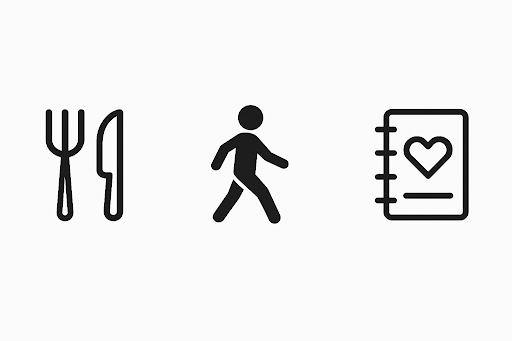
What to Expect in the First 14 Days
Days 1-3: The Adjustment
Your body is shifting from burning sugar to burning fat. You might feel a bit tired or experience mild headaches as your system detoxes from processed foods. This is temporary and completely normal. Stay hydrated, add extra salt, and trust the process.
Days 4-6: The Shift
Energy starts to stabilize. Those mid-afternoon crashes disappear. You notice you're not thinking about food constantly. Sleep may improve. Some people experience vivid dreams as their brain chemistry rebalances.
Days 7-9: The Clarity
Mental fog lifts. You feel sharper, more focused. Cravings for sugar and processed foods fade significantly. Your clothes start fitting differently, even if the scale hasn't moved much yet.
Days 10-12: The Momentum
This is when most people have their "aha" moment. Energy feels abundant and steady. You realize you've gone hours without thinking about food. Your skin looks clearer. You feel lighter - not just physically, but emotionally.
Days 13-14: The Confidence
You know this is working. You feel in control of food instead of controlled by it. You're sleeping deeply, waking refreshed, moving through your day with energy you forgot you had.
Some days will feel easier than others. That’s normal. Your body is doing deep healing work, undoing years of metabolic dysfunction. The temporary discomfort is your body’s way of clearing out the old to make room for the new.
When you feel challenged, remember: this is your body getting stronger, not weaker. Every craving that passes makes the next one easier. Every good choice builds momentum for the next.
You’re not just changing what you eat. You’re changing your entire relationship with food.
Real Stories, Real People
The results speak for themselves, but the stories behind them reveal something deeper.
Sarah, 44, teacher and mom of two: “I’d been on every diet imaginable. Lost and gained the same 20 pounds five times over. The reset was different from day one – I wasn’t hungry, I wasn’t obsessing over food, I wasn’t fighting cravings. I lost 13 pounds in two weeks, but more importantly, I felt like myself again. My energy was steady all day. I could focus on my students instead of wondering when I could eat next.”

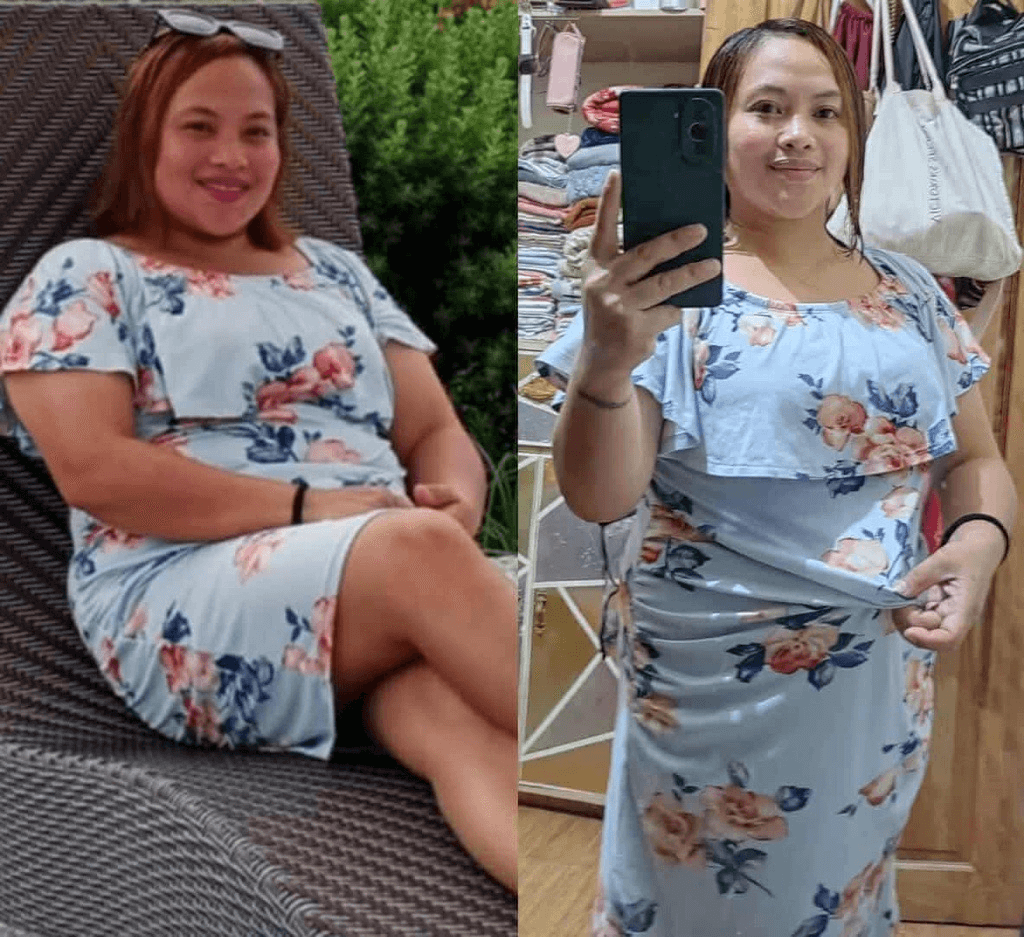
Rebecca, 38, marketing executive: “My PCOS had gotten so bad that my periods had stopped completely. My doctor wanted to put me on more medication. After the reset, my cycle returned for the first time in eight months. My mood swings leveled out. The stubborn weight around my midsection finally started coming off. I felt like my body was working with me instead of against me for the first time in years.”
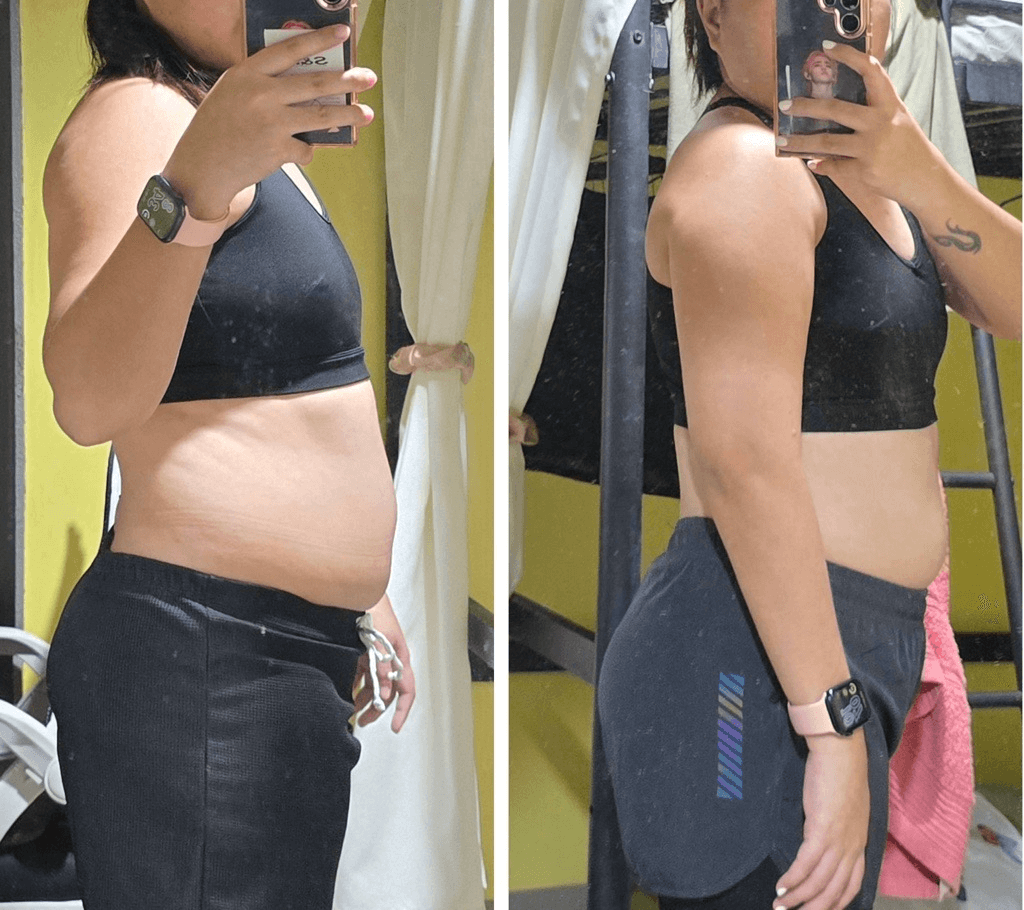
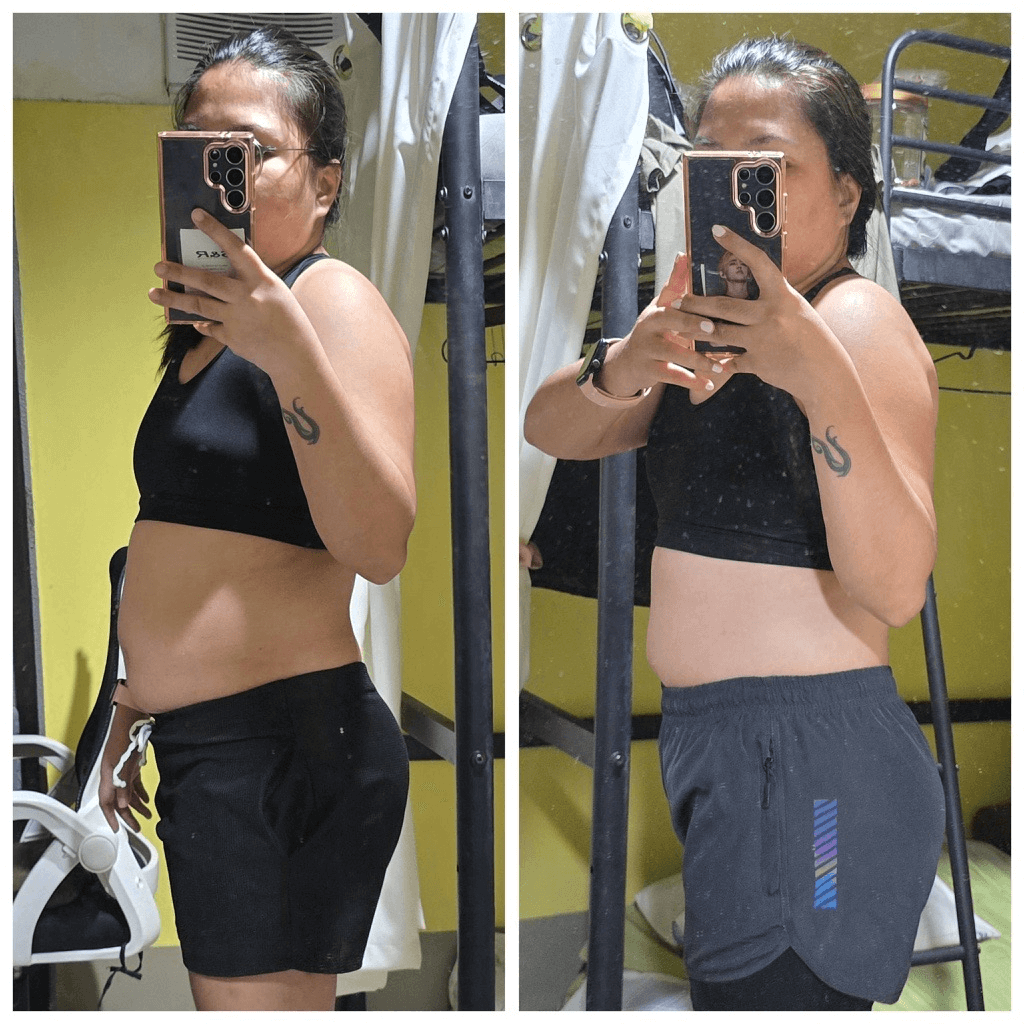
Linda, 52, recently divorced: “I started the reset at my lowest point – going through a divorce, feeling completely out of control of my life and my body. Within a week, something shifted. Not just physically, but emotionally. I felt stronger. More capable. Like I could handle whatever came next. I lost 9 pounds, but I gained something more valuable: confidence in my own strength.”
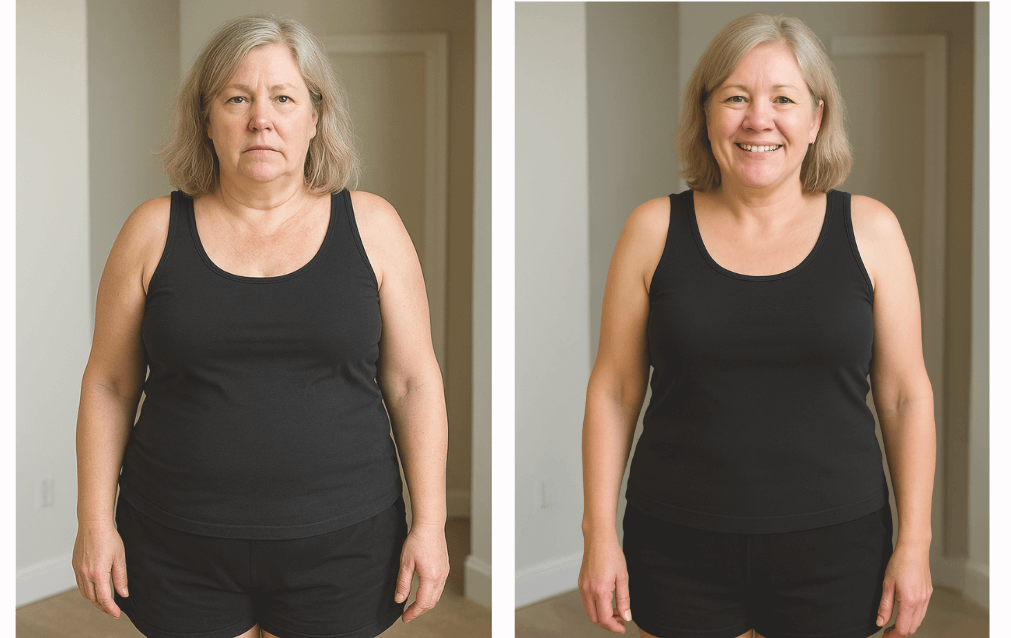
Jennifer, 29, new mom: “Six months postpartum, nothing fit, I was exhausted all the time, and I felt invisible in my own life. The reset gave me back my energy first, then my body, then my sense of self. I’m not the same person I was before having kids – I’m stronger. The reset helped me find that strength.”

These women didn’t just lose weight. They reclaimed their lives. They stopped living in bodies that felt like prisons and started inhabiting bodies that felt like home.
The reset works because it honors what your body actually needs, not what the diet industry wants to sell you.
Why Other Diets Fail
Every diet I’d tried before followed the same brutal formula: deprivation, punishment, and shame.
Cut your calories so low that you’re constantly hungry. Avoid entire food groups that humans have eaten for thousands of years. Exercise until you’re exhausted and depleted. When you inevitably “fail” and regain the weight, blame yourself for lacking willpower.
But here’s what actually happens on restrictive diets:
Your metabolism slows by up to 20% within weeks. Your body thinks you’re starving and fights back by conserving energy and increasing hunger hormones. Ghrelin, the hormone that makes you hungry, can increase by 24%. Leptin, the hormone that signals fullness, drops significantly.
You’re not fighting a diet. You’re fighting millions of years of evolutionary programming designed to keep you alive during famines. And evolution always wins.
Meanwhile, your cortisol levels spike from the chronic stress of restriction. Elevated cortisol promotes fat storage, especially around your midsection. The very act of dieting makes you store more fat.
The rebound weight gain isn’t your fault. It’s biology. Most people regain all the weight they lost, plus extra, within two years. The diet industry counts on this cycle – they need you to fail so you’ll try again.
The 14-Day Reset works because it does the opposite of everything traditional diets do:
✅ Instead of restricting calories, it focuses on nutrient density.
✅ Instead of avoiding natural fats, it embraces them.
✅ Instead of fighting your hunger, it naturally regulates it. Instead of slowing your metabolism, it supports it.
✅ Most importantly, it treats your body as an ally, not an enemy. There’s no punishment, no shame, no white-knuckling through cravings. Just clear guidelines that work with your biology instead of against it.
This isn't another diet doomed to fail. This is a reset that prepares your body for long-term success.
The Freedom Factor
The most unexpected gift of the reset wasn’t the weight loss. It was the silence.
For the first time in years, food stopped screaming at me from every corner of my mind. I could walk past a bakery without an internal battle. I could sit through a meeting without counting down the minutes until my next meal. I could have one bite of something sweet and actually stop there, not because I forced myself to, but because I genuinely didn’t want more.
This is what freedom from food obsession actually feels like.
No more standing in your kitchen at midnight, fighting the urge to eat something you’ll regret in the morning. No more elaborate mental negotiations about whether you can “afford” a piece of fruit. No more guilt spirals after eating something not on your approved list.
When your body is properly nourished, cravings don’t disappear through willpower – they disappear because there’s no biological drive behind them. You’re satisfied. Your blood sugar is stable. Your hunger hormones are balanced. Your brain isn’t frantically signaling for more fuel.
Eating becomes simple again. You eat when you’re hungry. You stop when you’re satisfied. You don’t think about it for hours afterward.
But the freedom goes deeper than food. When you’re not spending mental energy battling cravings and planning your next meal, that energy gets redirected to everything else in your life. You’re more present with your family. More focused at work. More engaged with your own thoughts and dreams.
You stop defining yourself by what you ate or didn’t eat that day. You stop carrying shame about your body, your choices, your perceived lack of discipline. You realize that none of it was ever about discipline in the first place.
**This is what it feels like to make peace with food and with yourself.
Beyond the 14 Days
The reset is just the beginning. It’s your body’s chance to remember what normal feels like.
After 14 days, you’ll have broken the cycle of cravings and energy crashes. Your metabolism will be functioning efficiently. Your relationship with food will feel calm and natural instead of chaotic and stressful.
But the real magic is in what happens next: you get to choose.
Some women discover they feel so good eating this way that they continue with minimal changes. They’ve found their sustainable approach to nourishing themselves, and they stick with it because it works for their life.
Others use the reset as a foundation to gradually reintroduce other foods, now with the awareness of how different foods actually make them feel. They can tell the difference between genuine hunger and habit. They know when something is truly satisfying versus just temporarily distracting.
Still others find that certain health issues they’d accepted as “normal” – joint pain, skin problems, digestive issues, hormonal imbalances – continue improving week after week as their bodies heal from years of inflammatory foods.

The reset doesn’t lock you into a rigid way of eating forever. It gives you back the ability to make conscious choices about food instead of being driven by cravings, marketing, or old habits.
Your body continues to heal and strengthen. Your energy stays stable. Your confidence in your own ability to nourish yourself properly becomes unshakeable.
Most importantly, you’re no longer starting over every Monday. You’re not trapped in the cycle of restriction and rebound. You’ve found a sustainable foundation that works with your life, not against it.
**This is your reset button – not your final destination.
The Bigger Picture
The changes that happen during the reset extend far beyond what you see in the mirror.
When your brain runs efficiently on stable fuel instead of sugar crashes, mental clarity becomes your new normal. You think faster, focus longer, make decisions more easily. That afternoon brain fog that had you reaching for caffeine? Gone.
The emotional healing runs even deeper. When you’re not battling food cravings all day, when you’re not carrying shame about your eating choices, when you’re not defining your worth by a number on a scale – mental space opens up for everything else in your life.
You show up differently in conversations. You’re more present with your children instead of distracted by thoughts about your next meal. You contribute more meaningfully at work because your energy is consistent. You engage more fully in your relationships because you’re not mentally rehearsing food guilt or planning your next diet.

You show up differently in conversations. You’re more present with your children instead of distracted by thoughts about your next meal.
You contribute more meaningfully at work because your energy is consistent. You engage more fully in your relationships because you’re not mentally rehearsing food guilt or planning your next diet.
The identity shift is profound. You stop being someone who “struggles with weight” or “has no willpower” or “can’t stick to anything.” You become someone who understands their body, makes conscious choices, and trusts themselves to navigate challenges.
This confidence spills over into every area of life. Women tell me they finally asked for that promotion, started that business, signed up for that class they’d been considering for years. When you prove to yourself that you can transform your relationship with food – something that felt impossible – other challenges start to feel manageable too.
You’re no longer a prisoner of diets, meal plans, or other people’s rules about what you should eat. You’ve developed the most valuable skill of all: the ability to listen to your own body and respond appropriately.
**This isn’t just about losing weight. This is about reclaiming your life.
Imagine If...
Imagine waking up tomorrow morning naturally refreshed, without hitting the snooze button three times. You stretch, feeling genuinely rested, and realize you’re actually looking forward to the day ahead.
You walk to your closet and reach for clothes you haven’t worn in months – not because you forgot about them, but because they didn’t fit. Today, they slide on effortlessly. You catch a glimpse of yourself in the mirror and smile, recognizing the confident woman looking back at you.
In the kitchen, you’re not frantically calculating calories or battling cravings for something sweet. You prepare a simple, satisfying breakfast and eat it mindfully, without guilt or mental negotiations about what you “should” or “shouldn’t” have.
Throughout your day, your energy remains steady. No 3 PM crash sending you searching for caffeine or sugar. No mental fog making simple tasks feel overwhelming. You’re sharp, focused, present in every conversation and interaction.
When you pick up your children from school, they comment on how happy you seem. When your partner asks about your day, you realize you actually have the energy to engage in a real conversation instead of just going through the motions.
At dinner with friends, you enjoy the meal and the company without obsessing over what’s on your plate. You’re not the woman who orders a salad while everyone else enjoys their food. You’re not mentally calculating how you’ll “make up for” this meal tomorrow. You’re simply present, enjoying life.
Later that evening, you look in the mirror while getting ready for bed and feel genuine gratitude for your body – not just for how it looks, but for how strong and capable it feels. You’re not planning your next diet or promising to “be better” starting Monday.
This is what life looks like when you’re free from the prison of dieting. This could be your reality in just 14 days.

Invitation to Begin
I know what it’s like to stand where you’re standing right now.
Maybe you’re tired of starting over every Monday. Maybe you’re exhausted from fighting your own body. Maybe you’re ready to stop carrying shame about food, about your weight, about your perceived lack of willpower.
Maybe you’re skeptical. I understand that too. You’ve been disappointed before. You’ve tried things that promised to be different, only to find yourself back where you started, sometimes worse than before.
This moment – right here, right now – is your choice point.
You can continue down the path you’ve been on. Keep trying the same approaches that haven’t worked. Keep believing that the problem is your discipline, your motivation, your character. Keep waiting for the “perfect time” to start taking care of yourself.
Or you can choose differently.
You can choose to trust that your body isn’t broken, just confused by years of conflicting information. You can choose to believe that the struggle isn’t a character flaw, but a natural response to an unnatural way of eating. You can choose to give yourself 14 days to experience what it feels like when your body works with you instead of against you.
I can’t make this choice for you. No one can.
But I can tell you this: you are stronger than you think. You are more capable than you believe. And the life you want – the energy, the confidence, the peace with food and with yourself – is closer than you imagine.
The next 14 days are going to pass whether you begin this reset or not. The only question is: how do you want to feel when they’re over?
**You have walked this road of struggle long enough. You deserve to know what freedom feels like.
Press the Reset Button Today
The 14-Day Reset Method isn’t just another program. It’s your pathway back to trusting your body, enjoying food without guilt, and living with energy you forgot you had.
In just two weeks, you can experience:
- Steady energy from morning to night without crashes
- Natural appetite regulation without constant hunger
- Mental clarity without afternoon brain fog
- Deeper sleep and easier mornings
- Clothes fitting better and confidence returning
- Freedom from food obsession and cravings
This is simple. This is fast. This is real.
No counting calories or measuring portions. No complicated meal plans or expensive supplements. No punishing workouts or restrictive rules that set you up to fail.
Just clear guidelines that work with your body’s natural design, helping you feel like yourself again.
The women who’ve completed this reset describe it the same way: “Finally, something that works.” They’re not just talking about weight loss. They’re talking about getting their lives back.
You can read their stories, study the science, and imagine what it would feel like – or you can give yourself 14 days to actually experience it.
Your body is ready. Your life is waiting.
The next two weeks will pass regardless of what you choose today. You can spend them exactly as you’ve been spending them – struggling with the same patterns, fighting the same battles, carrying the same frustrations.
Or you can spend them discovering what it feels like when your body finally works with you instead of against you.
You Don’t Need to Have It All Figured Out. You Just Need to Start.
The Next Two Weeks Can Be Different.
You’ve carried this weight long enough. It’s time to put it down.